How a Criminal Defense Lawyer in Lafayette LA Prepares for Trial
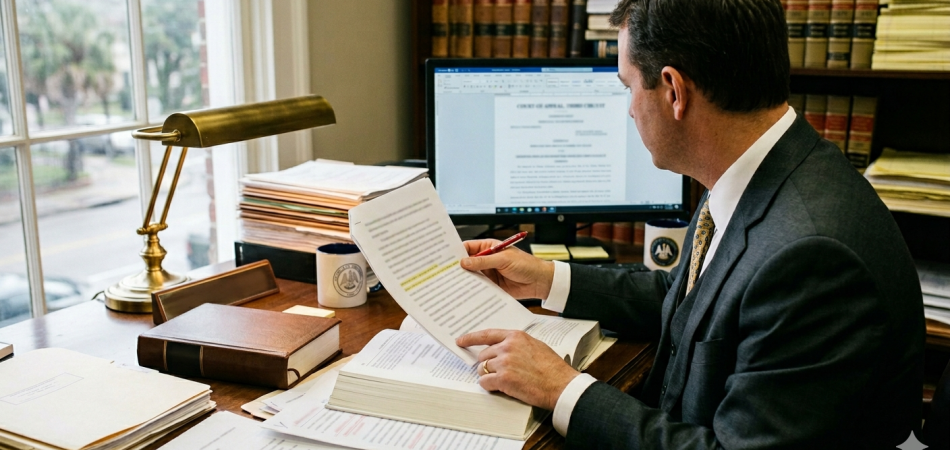
A trial starts long before anyone walks into a courtroom. By the time a jury is called, a strong criminal defense case has already been built, tested, challenged, and refined through weeks or months of hard preparation. That preparation is rarely dramatic from the outside. It often looks like late nights with discovery files, difficult client meetings, witness interviews that go nowhere, and repeated review of body camera footage that reveals one small inconsistency on the tenth pass.
For a defendant, trial can feel like a single day of reckoning. For a defense lawyer, it is the final stage of a disciplined process. Every decision matters, from whether to file a suppression motion to how to phrase a cross examination question so the witness cannot explain around it. In Lafayette, Louisiana, local practice, judicial preferences, and jury expectations also shape how that work gets done. A criminal defense lawyer Lafayette LA residents trust has to know more than criminal statutes. The lawyer must understand how the local courts function in real life.
The case file is only the starting point
Most people assume trial preparation begins with reading the police report. It does, but that report is rarely the most important document in the case. Police reports are summaries written from one perspective, usually with a built in narrative that points toward guilt. A defense lawyer reads them closely, but with caution. The better question is not, “What does the report say?” It is, “What is missing, what is exaggerated, and what evidence actually supports this account?”
That means gathering and reviewing discovery in detail. Depending on the charge, discovery may include offense reports, arrest reports, witness statements, photographs, surveillance footage, dispatch logs, search warrants, lab reports, phone downloads, crime scene diagrams, medical records, and body camera video. In some felony cases, the digital discovery alone can stretch into hundreds or even thousands of pages once transcripts, metadata, and supplemental reports are added.
A seasoned defense lawyer does not simply read through the file once and move on. The first review is often broad, just to understand the allegations and timeline. The second pass tends to focus on contradictions. The third often centers on what the prosecution will need to prove, element by element. If the state charges possession with intent, for example, the lawyer is not only looking at whether drugs were found. The lawyer is asking whether the evidence truly supports intent to distribute, whether someone else had access to the area, whether the search was lawful, and whether the testing chain is solid.
In Lafayette courts, practical detail matters. Where exactly was the stop made? Which agency conducted it? Was it Lafayette Police Department, the sheriff’s office, state police, or a task force? Different agencies generate records differently, preserve video in different ways, and train officers under different policies. Those details can shape the defense.
Building the timeline before building the theory
One of the first tasks in serious trial preparation is constructing a reliable timeline. That sounds simple until you try it. Witnesses estimate time poorly. Reports often round minutes off. Videos can begin after the key event already happened. Calls for service may be logged in one system while evidence collection is recorded in another. Small timing gaps can become major issues in court.
A careful defense lawyer puts the events in sequence and checks every source against the others. When did the 911 call come in? When did officers arrive? When was consent allegedly given? How long after detention did questioning begin? At what point was the client handcuffed? Those answers can affect whether a stop was lawful, whether a confession may be suppressed, or whether the state’s witness is simply mistaken.
This part of the job is less glamorous than courtroom argument, but it often wins cases. I have seen matters shift because one timestamp on a body camera contradicted a report’s claim about when probable cause developed. I have seen a witness sound confident on direct examination and then unravel when confronted with text messages that fixed the timeline more accurately than memory ever could. Trial preparation is where those pressure points are found.
Meeting the client often, and asking better questions
Clients rarely tell their story in a clean, chronological way the first time. That is not dishonesty. It is stress, embarrassment, confusion, fear, and sometimes trauma. In criminal cases, people often leave out facts they think are unimportant or damaging, only to realize later that those details matter. A defense lawyer preparing for trial has to revisit the story again and again, not because the lawyer is skeptical of the client, but because the lawyer needs the fullest possible picture.
A productive client meeting is not just, “Tell me what happened.” It is more precise. Where were you standing? Who else was in the room? Had you been drinking? Did you touch the item? Who owns the car? Have you seen this officer before? Did anyone promise you anything? Did you text anyone afterward? Were there children present? Was there music playing? Practical details can shape credibility and create corroboration.
In Lafayette, as anywhere, a lawyer must also prepare the client for the realities of local juries. Jurors notice manner, not just words. They notice when an answer sounds rehearsed, when a witness argues instead of responds, and when someone becomes evasive on a small point. A good lawyer does not coach a client to perform. The lawyer prepares the client to listen carefully, answer truthfully, and stay composed when the prosecutor presses hard.
Sometimes trial preparation means telling the client uncomfortable truths. A defendant may have a valid legal defense and still make a poor witness. Another client may present well but have a weak suppression argument. Part of a defense lawyer’s job is separating what feels fair from what can actually be proved in court. That judgment often shapes whether the defense will call the client to testify, rely on cross examination alone, or adjust strategy entirely.
Investigating beyond the state’s version
The prosecution’s file is not the full universe of evidence. A criminal defense lawyer preparing for trial often has to conduct an independent investigation. That can mean visiting the scene, measuring sight lines, photographing lighting conditions, locating surveillance footage from nearby businesses, reviewing social media posts, or talking to witnesses who never made it into the police report.
Witness work deserves special mention because it is both essential and unpredictable. Some witnesses are cooperative. Others are reluctant, hostile, frightened, or simply tired of being contacted. A witness may tell police one thing, tell the defense another, and testify to a third. Memory shifts, especially when the original event was fast, stressful, or clouded by alcohol. Trial preparation means pressure testing every witness account before the state does it in front of a jury.
This is where lived local knowledge can matter. In Lafayette, neighborhoods, traffic patterns, business hours, and even festival season can affect what a witness likely saw or heard. A person who says the street was quiet at a certain hour may be wrong if the area was crowded after an event. A claimed line of sight may not hold up once you stand where the witness stood and realize a fence, parked truck, or corner building blocked the view.
Good defense work is specific. It is not enough to say a witness is unreliable. You need to know why.
Motions practice can define the battlefield
Some trials are won or lost before opening statements because the legal issues are fought early. Motions to suppress, motions in limine, requests for disclosure, and evidentiary challenges can narrow the prosecution’s proof or keep deeply prejudicial material from the jury.
If the police search was unlawful, the lawyer may move to suppress physical evidence. If statements were taken in violation of constitutional protections, the lawyer may challenge them before trial. If the prosecution intends to introduce prior bad acts or questionable expert testimony, the defense may try to exclude or limit that evidence. These motions are not routine paperwork. They are strategic tools.
A suppression hearing also serves another purpose. It can lock witnesses into sworn testimony before trial. Officers who testify at a hearing may later be cross examined with their prior statements if their account changes. That is one reason experienced lawyers prepare hearings as carefully as trials. A detail that seems minor in a pretrial hearing can become powerful impeachment later.
Judges in Lafayette, like judges everywhere, have individual courtroom preferences. Some want precise briefing. Some expect concise oral argument. Some allow wide latitude in questioning at hearings, while others keep tight control. A criminal defense lawyer Lafayette LA defendants hire for a serious case should already understand that courtroom culture. Knowing the law is mandatory. Knowing how to present it persuasively to the specific judge matters too.
Expert review and the cases that turn on science
Not every criminal trial needs an expert, but some absolutely do. Drug cases may hinge on lab testing and weight calculations. DWI cases may involve breath machine maintenance records, blood draw procedures, retrograde extrapolation, or field sobriety testing. Violent crime cases may call for forensic pathology, ballistics, DNA interpretation, or digital evidence analysis.
A defense lawyer preparing for trial has to decide whether to consult an expert, retain one, or use cross examination of the state’s witness instead. That is not only a legal judgment. It is also a practical one. Experts can be expensive, and not every issue requires independent testimony. Sometimes the strongest move is to use the prosecution expert’s own report, literature, or training standards against them.
The key is understanding the limits of forensic evidence. Jurors tend to give scientific testimony a great deal of weight, even when the underlying process includes interpretation, subjective judgment, or contamination risk. A strong defense lawyer translates complexity into plain language. If the chain of custody is incomplete, the jury should understand why that matters. If a blood test result depends on assumptions that may not fit the facts, that uncertainty needs to be made clear without sounding evasive.
Preparing witnesses is part law, part discipline
A witness who tells the truth can still hurt a case if not properly prepared. Trial preparation includes helping defense witnesses understand the setting, the pace, and the pressure of testimony. Most have never testified before. They do not know how quickly lawyers move, how carefully words get parsed, or how a perfectly innocent phrase can be twisted on cross.
Preparation does not mean scripting. In fact, overrehearsed testimony often lands badly. It sounds memorized, and jurors pick up on that. Better witness preparation focuses on habits: listen to the whole question, answer only what was asked, do not guess, say when you do not know, and avoid filling silence just because it feels uncomfortable.
For clients, this preparation is even more delicate. A defendant who chooses to testify will face scrutiny not only about the incident, but often about prior statements, prior convictions if admissible, and behavior before and after the event. The defense lawyer must decide whether the value of the client’s testimony outweighs the risk. That is rarely a simple call.
One common mistake is assuming a sympathetic story should automatically come from the defendant’s mouth. Sometimes it should. Other times the better strategy is to establish reasonable doubt through contradictions in the state’s evidence and testimony from neutral witnesses. Trial preparation means knowing when less is more.
Jury selection begins with the case theory
Voir dire is not a detached exercise in general fairness. It is tied directly to trial strategy. Before trial, a defense lawyer has to think hard about the attitudes likely to matter in this particular case. A drug possession case raises different concerns than an alleged domestic violence case, a self defense shooting, or a DWI. Jurors bring life experience, assumptions, and personal thresholds for credibility into the room.
In Lafayette, the jury pool can reflect a wide range of backgrounds, occupations, and views about law enforcement, personal responsibility, and public safety. A defense lawyer preparing for trial wants to identify not only overt bias, but subtler leanings. A juror may insist they can be fair and still reveal a strong tendency to trust officers over civilians, view silence as suspicious, or expect an innocent person to behave in a very narrow way.
The best voir dire is honest and case specific. It does not try to extract promises. It invites people to admit what they believe, so the lawyer can make informed decisions about strikes and framing. If the defense theory depends on challenging police procedure, for instance, the lawyer needs jurors who can accept that questioning law enforcement is not anti police. It is part of the constitutional process.
Cross examination is written in advance, then rewritten
Good cross examination looks spontaneous. It rarely is. In serious trial preparation, cross examination is drafted, organized by topic, tied to exhibits, and revised repeatedly as the evidence develops. The lawyer decides what each witness must give up, what points are not worth chasing, and where the danger lies if the witness is allowed room to explain.
That preparation often includes creating impeachment files. Prior statements, hearing transcripts, reports, text messages, social media posts, and body camera clips get matched to specific points. If a witness says they had a clear view for thirty seconds, the lawyer may be ready with a scene photo showing an obstructed angle and a prior statement describing only a “glimpse.” That does not happen by luck. It happens because the lawyer prepared with precision.
Cross examination strategy also depends on witness type. An officer who is polished and experienced requires a different approach than a frightened civilian witness. A lab analyst Criminal defense lawyer Lafayette LA Ikerd Law Firm may need tightly technical questions. A complaining witness in an emotionally charged case may call for restraint and careful tone. Aggression for its own sake usually backfires, especially with juries.
One of the best habits in trial preparation is identifying the three or four points that truly matter with each witness. Trying to score every possible point can dilute the important ones. A disciplined lawyer knows when to stop.
Exhibits, objections, and the practical mechanics of trial
Trials are won on substance, but they can be damaged by poor organization. A defense lawyer preparing for trial must know where every exhibit is, whether it has been marked, whether foundation can be laid, and whether any objections need to be raised in advance. That includes photographs, maps, medical records, transcripts, certified convictions, phone records, and digital media.
Technology creates its own set of risks. Courtroom presentation systems fail. Audio clips do not play. File formats behave differently on courthouse equipment. A prudent lawyer checks everything ahead of time and always has backups. Paper copies still matter. So do extra cables, printed witness outlines, and a clean exhibit notebook that can be used even if screens go dark.
Objections also require planning. Some lawyers object too often and lose credibility. Others wait too long and let damaging testimony in without a challenge. Trial preparation means knowing the prosecution’s likely path well enough to anticipate the evidentiary fights before they happen. If a prosecutor is likely to elicit hearsay under the guise of explaining an investigation, the defense should be ready. If a witness may volunteer inadmissible prior conduct, the lawyer should have addressed it with the court beforehand if possible.
Plea negotiations do not stop because trial is approaching
One of the least understood parts of criminal defense work is that serious trial preparation often improves plea negotiations. When the prosecution sees that the defense has reviewed every recording, litigated key issues, lined up witnesses, and is prepared to expose weaknesses at trial, the settlement posture can change.
That does not mean every case should resolve with a plea. It means preparation creates leverage. A prosecutor is far less likely to offer a thoughtful resolution if the defense appears unready, passive, or afraid to try the case. Real trial readiness changes the conversation.
It also helps the client make an informed decision. The choice between a plea and a trial should never be made in the abstract. It should be based on a clear understanding of the evidence, the legal issues, the sentencing exposure, and the likely human dynamics in the courtroom. A lawyer owes the client candor here, not optimism for its own sake.
There are times when the evidence is overwhelming and the best lawyering happens in mitigation, negotiation, and sentencing advocacy. There are other times when the police cut corners, the witnesses are shaky, or the legal burden is far from met. Knowing the difference is the heart of experienced criminal defense work.
The final week before trial
The days leading into trial tend to compress everything. Witnesses need confirmation. Motions need rulings. Subpoenas have to be checked. Jury instructions must be reviewed closely because a single word can shape how the law reaches the facts. Openings and closings get refined, then cut down, then rebuilt based on what the court rules in or out.
A focused lawyer usually spends that final stretch doing five things repeatedly:
- Reviewing the core theory of defense until every fact fits or is consciously set aside
- Tightening witness examinations so they stay clear and purposeful
- Checking exhibits, technology, and logistics for avoidable failures
- Meeting with the client to discuss expectations, risks, and courtroom conduct
- Reassessing whether any late negotiation serves the client better than trial
Notice what is not on that list: theatrics. Strong trial lawyers are not preparing speeches for television moments. They are making sure the record is clean, the proof is organized, and the client is not surprised by the process.
What clients should understand about real preparation
From a client’s point of view, the quiet phases of a criminal case can feel unsettling. There may be long periods where nothing seems to happen in open court. That does not always mean the case is stalled. It often means the work is happening where it should, in files, meetings, investigation, legal research, motion practice, and strategy sessions.
A well prepared criminal defense lawyer Lafayette LA clients rely on should be able to explain where the case stands, what the next major decision points are, and what trial would realistically involve. Not every detail can be predicted, but the process should never feel mysterious for no reason. Good communication is part of preparation because informed clients make better decisions.
It also helps to understand that trial preparation is not linear. New evidence appears. Witnesses change stories. Courts issue rulings that force strategic shifts. A lawyer may prepare one path and then pivot fast once a key motion is denied or a witness becomes unavailable. That adaptability is not a sign of disorganization. In many cases, it is the mark of experience.
The public often sees trial as argument. In practice, it is judgment. Which issue deserves the most attention? Which witness should be challenged hard, and which should be handled lightly? Which fact will matter to this jury, in this courtroom, with this judge? That kind of judgment comes from deep preparation and real courtroom time.
By the time a criminal case reaches trial in Lafayette, the strongest defense lawyers have already done far more than read the file and hope for a weak prosecution. They have tested facts, challenged assumptions, scrutinized police work, prepared witnesses, refined the case theory, and built the discipline to make careful choices under pressure. Trial is where that preparation becomes visible. The outcome often turns on work the jury will never see.
Ikerd Law Firm
600 Jefferson St Ste 903
Lafayette, LA 70501
(337) 366-8994
FAQ About Criminal defense lawyer Lafayette LA
How much does a criminal lawyer cost in Louisiana?
Fees vary with the charges, complexity, expected work, and attorney's experience. Ask for a written fee agreement explaining the services included, payment schedule, and any separate expenses before hiring counsel. An initial consultation can help clarify the likely scope and cost of representation.
Who is the best criminal defense attorney in Lafayette, LA?
There is no single attorney who is the best fit for every case. Look for a Louisiana-licensed lawyer with experience handling similar charges, clear communication, and a fee arrangement you understand. Discuss the lawyer's approach during a consultation, and be cautious of anyone who guarantees a result.
How to afford a criminal defense lawyer?
Ask prospective attorneys about their fees and whether payment arrangements are available. If you cannot afford representation, ask the court or local public defender's office how to apply for appointed counsel. Eligibility depends on your finances, the case, and applicable requirements; appointment is not automatic.